



این راهنما ساختارهای مختلف این دو نوع لاستیک و مزایا و معایب هر یک را توضیح میدهد تا به شما در تصمیمگیری آگاهانهتر هنگام انتخاب لاستیک کمک کند. ساختار داخلی یک لاستیک میتواند بر هر جنبهای از عملکرد آن، مانند کشش و مقاومت در برابر سایش، تأثیر بگذارد. از زمانی که میشلن لاستیک رادیال را در سال ۱۹۴۶ معرفی کرد، به دلیل افزایش راحتی رانندگی و بهرهوری سوخت، به نوع استاندارد مورد استفاده در خودروهای سواری جدید، وسایل نقلیه تجاری و ماشینآلات صنعتی تبدیل شده است. با این حال، هنوز هم ممکن است لاستیکهای لایه ضربدری یا “لایه بایاس” را در برخی از وسایل نقلیه کلاسیک، وسایل نقلیه خارج از جاده، تراکتورها و موتورسیکلتها پیدا کنید.
تایر لایه متقاطع
این نوع تایر از سال ۱۸۸۸ وجود داشته است. این تایرها توسط جان بوید دانلوپ اختراع شدند و برای اولین بار در دوچرخه مورد استفاده قرار گرفتند. طراحی پنوماتیک با استفاده از شبکهای از تارهای نایلونی در هم تنیده ساخته شده است که به صورت مورب با زاویه ۴۵ درجه نسبت به خط مرکزی چرخ روی هم قرار گرفتهاند. ساختار آنها در کنار پوسته لاستیکی بیرونی سخت، استحکام و سختی دیوارههای جانبی را افزایش میدهد. این امر باعث میشود دیوارههای جانبی در برابر سایش و پارگی مقاومتر باشند. این امر برای محافظت از تیوب باد شده داخلی که از لاستیک نرم ساخته شده است و از هدر رفتن هوا جلوگیری میکند، مهم است. اگر تیوب سوراخ شود، منجر به پنچر شدن تایر میشود.
تایر رادیال
همانطور که در بالا ذکر شد، لاستیکهای رادیال بیش از نیم قرن بعد به عنوان جایگزینی انعطافپذیرتر برای لاستیکهای لایه متقاطع معرفی شدند. آنها به جای لاستیکهای نایلونی از طنابهای فولادی و همچنین تسمههای فولادی برای پشتیبانی از آج لاستیک استفاده میکنند. در یک لاستیک لایه شعاعی، طنابها همپوشانی دارند و با زاویه ۹۰ درجه نسبت به خط مرکزی چرخ قرار میگیرند. مزیت این طراحی این است که انعطافپذیری و استحکام لاستیک به آن اجازه میدهد تا ضربات و ضربات را به طور مؤثرتری جذب کند، تماس با جاده را حفظ کرده و گرمای کمتری تولید کند. علاوه بر این، این ساختار نیازی به تیوب داخلی ندارد.
If your radial or cross ply tyres are badly punctured or the tread has been worn down, you can easily compare the prices of Michelin tyres and those from other popular brands online. Both types vary in complexity, but it may be possible to repair the tyre using either a sealant or cross ply repair patches, for example.
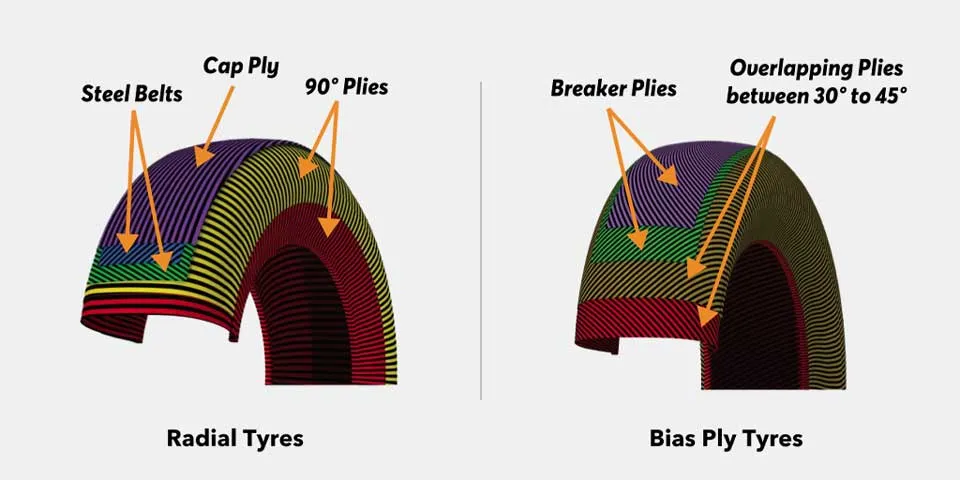
Radial vs Cross Ply
Cross ply tyres: advantages and disadvantages
- High resistance to sidewall damage
- Cheaper to produce
- Improved vehicle stability in certain driving/working environments
- Lower fuel efficiency
- Reduced driving comfort due to tyre rigidity
- Poor heat dissipation, causing the tyre to wear faster
- A low speed rating, more likely to blow out at high speeds
Radial tyres: advantages and disadvantages
- Improved road contact and vehicle handling
- Improved fuel efficiency
- Improved driving comfort due to flexibility
- A higher speed rating
- Higher resistance to tread wear and less risk of a loss of traction
- The sidewalls are more vulnerable to damage caused by collisions
- Less effective at handling minor bumps in the road due to steel belt
Safety
Under no circumstances should you use tyres with two different constructions on the same axle. It is highly advisable to stick to one type of tyre for both axles for safety reasons related to vehicle stability and weight distribution. In cases where mixing tyres is unavoidable, it is recommended that cross ply tyres are fitted to the front axle and radial ones are fitted at the rear.
Making sure the tyre tread depth complies with safety regulations is also critical. If the tread is too worn, it could cause a loss of traction and result in an accident. This is especially dangerous in wet driving conditions. If you need to replace your tyres quickly and affordably, you can easily select and buy cheap car tyres online.
Related products
خط
 Account
 Categories
 Car filter
 Search
 Canyon
 Sidebar
 Top
Top
enovathemes
Awesome comparison! It\’s crucial for car owners to understand the difference between radial and cross-ply tires. Your breakdown on performance, handling, and construction is spot on. This knowledge will definitely help me make a more informed decision when choosing tires for my vehicle. Thanks!
enovathemes
I\’ve always wondered about the real differences between radial and cross-ply tires. Your post cleared up a lot for me. I didn\’t realize how much technology goes into tire construction and its impact on performance. Now I can make a more educated choice for my next set of tires. Much appreciated!
enovathemes
Thanks for highlighting the environmental impact! It\’s interesting to see how tire choice can affect fuel efficiency. Your comparison made me reconsider my preferences and think about the broader implications. A great reminder that even small choices, like choosing between radial and cross-ply, can make a difference. Keep up the informative posts!
enovathemes
This is gold for someone like me who enjoys working on cars! Understanding the tire construction and how it impacts performance gives me a whole new perspective on optimizing my vehicle. Your detailed comparison has motivated me to dive deeper into the world of tire technology. Thanks for sparking my curiosity!
enovathemes
I\’m planning a road trip soon, and this breakdown on radial vs. cross-ply tires couldn\’t have come at a better time. Knowing how each type performs in different conditions will help me ensure a safer and more comfortable journey. Your post is a handy guide for anyone hitting the road!